

-

- Home
- Firm Overview
- Attorney Profile
- Practice Areas
- Criminal Law
- Federal Criminal Law
- Alien Smuggling
- DWI / DUI
- Boating While Intoxicated
- Expunctions
- Felonies
- White Collar Crimes
- Homicide
- Human Smuggling
- Internet Crimes
- Sex Offenses
- Motions to Revoke Probation
- Traffic Violations
- Weapons Charges
- Asset Forfeiture
- Federal Drug Charges
- State Drug Charges
- Testimonials
- Blog
- Contact Us
Schedule Your Consultation
210-226-0965
What Is Constructive Possession in a Texas Drug Case?
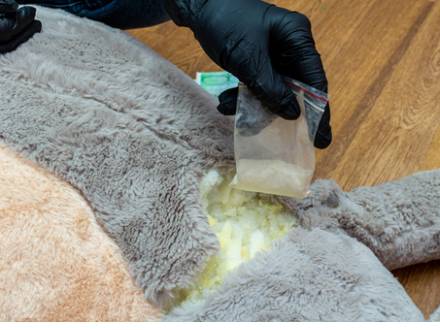 Constructive possession can apply in a drug case even when nothing is found directly on a person. If you are facing state or federal drug charges, you need to know how this rule works under Texas law. An attorney can help you make sense of what is happening and what legal options may exist. Start building your defense by contacting the San Antonio, TX drug crimes defense lawyer at Law Offices of Sam H. Lock.
What Does "Constructive Possession" Mean Under Texas Law?
Constructive possession means the state claims a person knew about drugs and had the ability to control them, even if the drugs were not found in that person’s hands, pockets, or bag. This is different from actual possession, where drugs are found directly on someone. With constructive possession, the focus is on control and awareness.
Texas drug charges are shaped by both the type and amount of substance involved. For example, Texas Health and Safety Code § 481.115 explains how possession of certain controlled substances in Penalty Group 1 is punished. Penalty Group 1 is the category Texas uses for the most strictly regulated and highest-penalty drugs, such as cocaine, heroin, and methamphetamine. Marijuana offenses are addressed separately under Texas Health and Safety Code § 481.121. These statutes set out penalty ranges, but in every case, the state still must prove that possession existed in the first place.
Constructive possession often comes up in shared spaces. This may include cars with more than one occupant, homes with roommates, or areas where several people have access. Being near drugs, by itself, is not always enough to prove legal possession.
What Types of Evidence Are Used To Prove Constructive Possession?
Because there is no single test for constructive possession, prosecutors often rely on several factors together. They want to show that someone had both knowledge of and control over drugs. Some of the factors that are considered include:
-
Where the drugs were located and whether they were in plain view
-
Who owned or had control over the space where the drugs were found
-
Whether personal items were found near the drugs
-
Statements made during the investigation
-
Fingerprints or other physical evidence
-
Behavior observed before or during the search
Even when some of these factors are present, they still must be considered carefully. A person may be in a place where drugs are found without legally possessing them. Each case depends on its specific facts.
How Can You Challenge Constructive Possession Claims?
Your defense lawyer can closely review how the case against you was built and whether the evidence truly connects you to the drugs that were found. This includes looking at who had access to the area and whether the facts actually support a claim of knowledge and control. Weak or unclear connections can play an important role in how your case moves forward.
Search and seizure issues can also come up. If a traffic stop, search, or arrest did not meet legal standards, the evidence may be challenged. Your attorney reviews how law enforcement obtained statements and checks whether they followed proper procedures. They may find evidence that the case is not based on lawful and reliable proof.
Contact a San Antonio, TX Drug Possession Defense Attorney Today
If you are facing charges of constructive possession, it is crucial to get legal guidance to help you navigate the next steps. Call Law Offices of Sam H. Lock today at 210-226-0965 to schedule a consultation with a San Antonio, TX drug crimes defense lawyer you can trust.
From Our Blog
What Traffic Violations Can Lead to Criminal Charges in Texas?
Posted on Sep 08, 2026
Fighting a Boating While Intoxicated Charge in Texas
Posted on Aug 30, 2026
When Is Entrapment a Defense in a Texas Drug Charge?
Posted on Aug 16, 2026


