

-

- Home
- Firm Overview
- Attorney Profile
- Practice Areas
- Criminal Law
- Federal Criminal Law
- Alien Smuggling
- DWI / DUI
- Boating While Intoxicated
- Expunctions
- Felonies
- White Collar Crimes
- Homicide
- Human Smuggling
- Internet Crimes
- Sex Offenses
- Motions to Revoke Probation
- Traffic Violations
- Weapons Charges
- Asset Forfeiture
- Federal Drug Charges
- State Drug Charges
- Testimonials
- Blog
- Contact Us
Schedule Your Consultation
210-226-0965
What Happens if Police Find Drugs in My Car During a Traffic Stop in Texas?
If police find drugs in your car during a traffic stop, that doesn’t automatically mean you are guilty. Prosecutors must prove you knowingly possessed them, and police must follow the law when searching your vehicle.
If you were arrested during a traffic stop in 2026, understanding your rights can help you prepare a defense. Our San Antonio state drug crimes defense lawyer can review the search and the evidence against you.
What Drug Possession Charges Can Follow a Traffic Stop in Texas?
The charges depend on the type and amount of drugs found. Texas divides controlled substances into penalty groups with different punishments.
Under Texas Health and Safety Code § 481.115, possession of substances in Penalty Group 1 or 1-B can lead to felony charges. These groups include drugs such as cocaine, methamphetamine, heroin, and fentanyl. Possession of less than one gram is a state jail felony. One gram to less than four grams is a third-degree felony, while four grams to less than 200 grams is a second-degree felony.
THC concentrates and some edibles can also lead to felony charges. The exact type of THC and whether the product qualifies as legal hemp can matter. However, the exact substance and whether a hemp exception applies matter. Texas counts the weight of qualifying mixtures, including added substances, when determining certain penalties.
Police may also investigate possession with intent to deliver when they find large quantities, scales, packaging materials, or other evidence suggesting drug sales.
When Can Police Legally Search Your Car During a Texas Traffic Stop?
Police do not always need a warrant to search a vehicle, but they need a valid legal reason. One reason is probable cause, meaning officers have facts suggesting the car contains drugs or other evidence of a crime. When probable cause exists, police can search areas and containers where that evidence could be hidden. Officers can also ask for your permission to search. You have the right to refuse consent, and refusing does not establish guilt.
An arrest does not automatically allow police to search your car. Under Arizona v. Gant, officers can search the passenger area after an arrest when you are unsecured and could reach it, or when they reasonably believe it contains evidence related to the offense. Other legal reasons can still permit a search. Police can also conduct lawful inventory searches when vehicles are impounded.
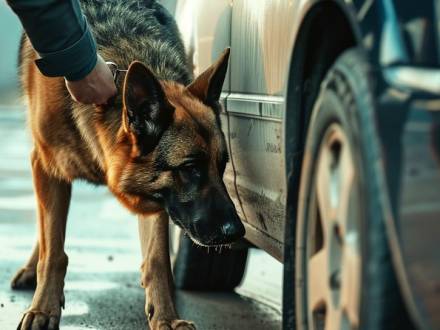
Officers cannot extend a traffic stop for a drug dog unless they have reasonable suspicion of another crime.
Can You Be Charged With Drug Possession if the Drugs Were Not Yours?
Texas law requires proof that you knowingly or intentionally possessed the drugs. Possession means having actual care, custody, control, or management of the substance.
Prosecutors often look for evidence connecting you to the drugs. This can include where the drugs were found, whether they were visible, who owned the car, and whether anyone made statements about them. For example, drugs found inside a passenger's backpack do not automatically belong to the driver. The same applies when drugs are hidden in a borrowed car.
However, several people can knowingly possess the same drugs. The question is whether the evidence connects each person to the substance, not simply who was sitting closest to it.
How Can You Challenge an Illegal Vehicle Search in Texas?
If police searched your vehicle unlawfully, your attorney can ask the court to exclude the evidence through a motion to suppress. Under Texas Code of Criminal Procedure Article 38.23, evidence obtained in violation of state or federal law can be excluded from a criminal trial.
When there is a genuine dispute about facts that affect whether the search was lawful, the judge can also be required to instruct jurors to disregard illegally obtained evidence. Body camera footage, dashcam recordings, and police reports can help determine whether officers had grounds for the search.
An attorney can also examine whether officers extended the stop without reasonable suspicion or searched beyond the limits of your consent.
What Should You Do if Police Find Drugs in Your Car in Texas?
Your actions during a traffic stop can affect what happens next. To protect your rights:
-
Tell officers clearly if you do not consent to a search.
-
Do not physically resist officers or interfere with a search.
-
Avoid answering questions about who owns the drugs.
-
Do not open containers or move items unless lawfully directed.
-
Ask whether you are free to leave.
-
Request an attorney before answering questions about suspected crimes.
-
Write down what happened after the encounter.
-
Remember who recently used or had access to the vehicle.
You can remain silent without making statements that might later be used against you. However, you still need to provide legally required information during the stop.
Contact Our San Antonio, TX Drug Crimes Defense Attorney
Attorney Sam Lock began his career in civil litigation, which shaped his careful approach to reviewing evidence. With over 20 years of experience, he understands how to examine police reports, search procedures, and the facts behind drug charges. His office ensures calls are answered by a real person 24 hours a day, seven days a week.
Contact Law Offices of Sam H. Lock at 210-226-0965 to speak with our San Antonio state drug crimes defense lawyer today.
From Our Blog
What Happens if Police Find Drugs in My Car During a Traffic Stop in Texas?
Posted on Nov 04, 2026
What Makes a Sexual Assault Case Aggravated in Texas?
Posted on Oct 31, 2026
Can a Texas DWI Be Reduced to a Lesser Charge?
Posted on Oct 07, 2026


